

If you can’t fit three fingers in your mouth, you’re likely hitting the 35mm threshold for trismus. It’s a painful restriction of the jaw, often called lockjaw, caused by muscle spasms or scarring. Most cases are a temporary side effect of wisdom tooth removal, radiation therapy, or dental injections. However, if you don’t treat it within two weeks, the muscles can harden into permanent fibrosis. You need to combine heat therapy, specific stretching exercises, and professional medical care to regain your full range of motion.
What Is a Trismus
Trismus happens when your jaw muscles go into a sustained, involuntary contraction. It’s not just a stiff jaw. It’s a reflex reaction to muscle damage that you can’t control on your own. While doctors originally used the term for tetanus infections, we now use it to describe any restricted mouth opening.
Normal mouth opening is between 35 and 55 millimeters. That’s usually the width of your index, middle, and ring fingers stacked vertically (three finger technique). If you’re opening less than 35mm, you’ve officially crossed into trismus territory. The condition can make it impossible to brush your back teeth, chew a steak, or even speak clearly.
Trismus Disease
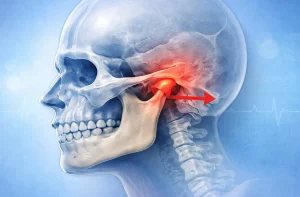
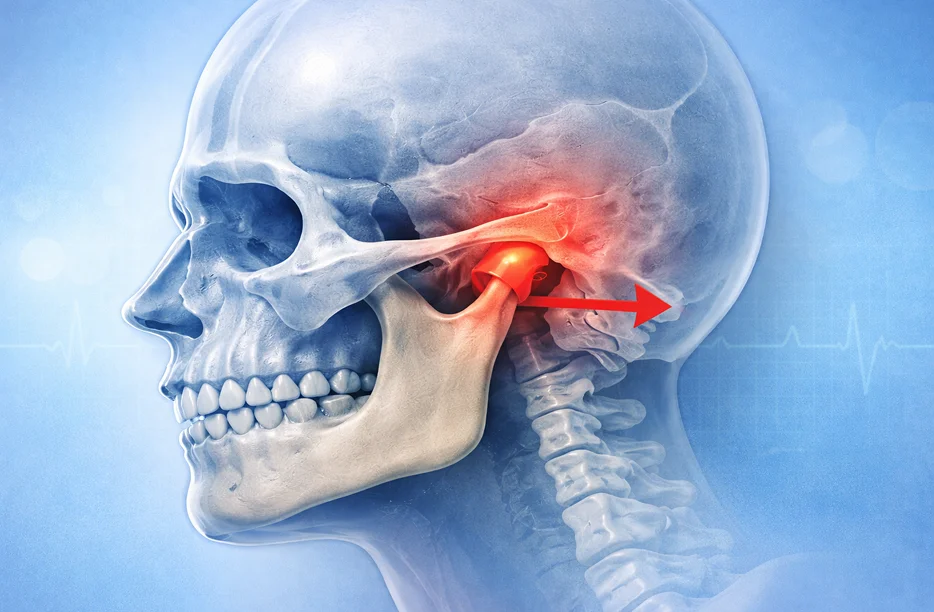
The Greek root of the word trismus means “a scream” or “gnashing.” It perfectly describes the discomfort. While people often confuse it with joint issues, trismus is primarily a muscular problem. It involves the masseter and temporalis muscles, which are the powerhouses that close your jaw.
These closing muscles are roughly ten times stronger than the muscles used to open your mouth. When they spasm, the opening muscles simply can’t win the tug-of-war. This leads to that “locked” sensation. It often follows a specific trigger like an infection, trauma, or a surgical procedure.
Diagnosis of Trismus
Doctors diagnose this condition mainly through a physical exam and your medical history. They’ll measure exactly how wide you can open using a ruler or the three-finger test. If your opening is between 20 and 30 mm, it’s mild. Under 10 mm is considered severe.
A key part of the diagnosis is distinguishing it from a joint disc displacement. Joint issues usually involve clicking or popping noises before the jaw locks. Trismus is usually quieter and feels more like a tight, restrictive wall. For serious cases, an MRI or CT scan helps rule out bone damage or tumors.
How Long Does Trismus Last
In most scenarios, trismus is a temporary nuisance. It typically resolves within about two weeks of its onset. You’ll see this often after a difficult dental extraction or an accidental needle prick to the medial pterygoid muscle during anesthesia.
If the restriction lasts longer than two weeks, you’re in the danger zone. Untreated muscle spasms can lead to the formation of fibrous scar tissue. This tissue eventually “hardens” the jaw into a permanently limited position. Chronic cases, especially those caused by radiation for head and neck cancer, require aggressive and long-term intervention.
Trismus Treatment
Success depends on starting early. The goal is to break the cycle of spasms before your muscles decide to stay that way forever. Heat therapy is your first line of defense. Moist hot towels placed on the jaw for 15 minutes every hour can relax the fibers and increase blood flow.
Doctors often prescribe NSAIDs like ibuprofen to handle inflammation and pain. If the spasms are severe, muscle relaxants or even Botox injections can help. Botox blocks the nerve signals to the overactive masseter muscle, forcing it to let go. For long-term scarring, specialized devices like the Therabite or simple stacked tongue depressors provide the necessary over-pressure to stretch the tissue.
Trismus Exercises
You have to move it to lose the stiffness. Start with an active range of motion by gently opening as wide as possible and holding for ten seconds. Repeat this five times, followed by lateral deviations where you slide your jaw side-to-side. These movements help realign the muscle fibers.
Passive stretching is also vital. You can use your fingers to gently pull the lower jaw down further than it wants to go. It’s best to use a sterile glove to keep bacteria out of your mouth while doing this. Jaw circles that mimic the chewing motion are great for functional recovery. Do ten to twenty circles in each direction several times a day.
Don’t ignore your posture. A chin tuck exercise helps align your ears over your shoulders. This relieves pressure on the upper neck nerves that control your jaw muscles. Circular massage of the masseter muscle, located just below your cheekbone, is also a must. Find the tender spots and apply pressure for 30 seconds to release the knots.
Locking Jaw Treatment in Dubai at Oris Dental Center
If you’re in the UAE and struggling with a locked jaw, you shouldn’t wait for it to fix itself. Expert intervention is necessary when the two-week mark passes without improvement. You can find specialized care for temporomandibular disorders and trismus right here in the city.
Contact Oris Dental Clinic in Dubai to speak with specialists who understand the mechanics of jaw mobility. They offer advanced diagnostic tools and treatment plans tailored to your specific cause. Whether your lockjaw stems from recent dental work or chronic muscle tension, professional help is available.
You don’t have to live with the anxiety of a restricted smile or the pain of every bite. Reclaiming your ability to eat and speak without restriction starts with a consultation. Let the experts at Oris Dental Clinic help you unhinge the tension and restore your function.
Book your appointment today and take the first step toward a pain-free jaw.