

Most people dread root canals because they expect a horror story. Modern reality is different. You walk in with throbbing pain and walk out with a sealed tooth that works like new. A root canal removes infected pulp to save your natural tooth from extraction. It’s no more painful than a filling thanks to advanced anesthesia. This guide breaks down the healing timeline and how to ensure your tooth lasts a lifetime.
The Before: Why Your Tooth is Screaming
You usually know something is wrong before you even call the dentist. Sharp pain when you bite down or a dull ache that keeps you up at night are the first clues. This happens because the soft tissue inside your tooth, the pulp, is inflamed or infected. Bacteria might have entered through a deep cavity or a small crack.
Some folks notice a lingering sensitivity to hot or cold drinks. Others might see a small, pimple-like bump on their gums. This is an abscess, a pocket of infection trying to find an exit. Your tooth might even start to turn a darker shade of gray or brown. These symptoms mean the nerve is in distress and won’t heal on its own.
The Silent Infection
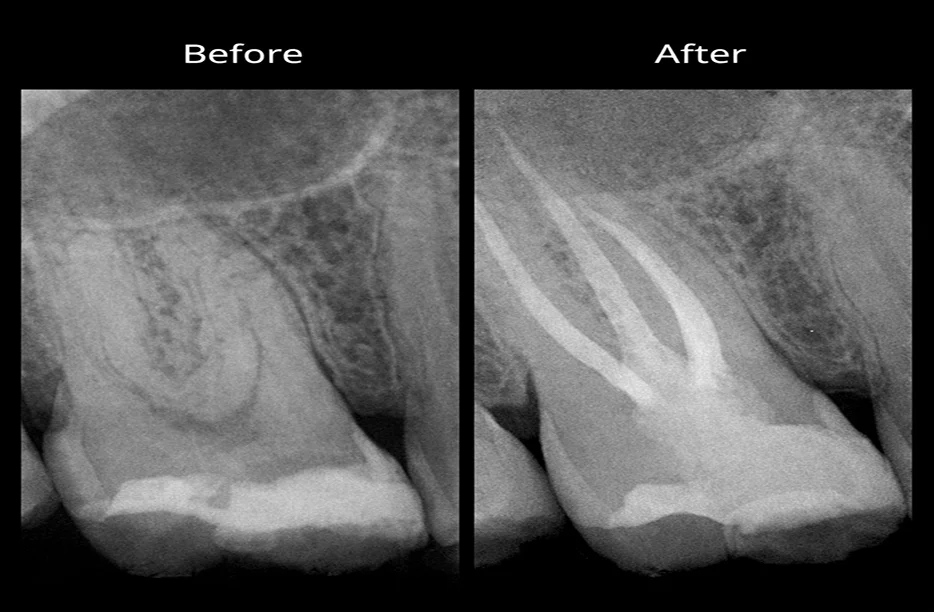
Sometimes a tooth dies without making a sound. You might not feel a thing until a routine X ray shows a dark circle at the root tip. This signifies bone loss where the infection has spread. Even without pain, a dead tooth is a ticking time bomb. It can lead to facial swelling or systemic issues if you ignore it.
The Procedure: Not Your Grandfather’s Root Canal
The reputation of the root canal is stuck in the 1950s. Today, endodontists use tools that make the process fast and boring. First, they numb the area so you feel nothing but light pressure. A small rubber sheet called a dental dam keeps the tooth dry and clean. This simple step is vital for preventing your saliva from reinfecting the canals.
Modern tech has changed the game. Specialists now use 3D imaging, known as CBCT scans, to see every tiny curve in your roots. This prevents them from missing hidden canals. Some clinics even use the GentleWave system. It uses soundwaves and fluid dynamics to clean microscopic spaces that old school metal files can’t touch.
High Tech Seals
Once the infection is gone, the dentist fills the space. They use gutta percha, a rubber-like material that seals the tooth from the inside. Many now use bioceramic sealers as well. These ceramics are bioactive, meaning they bond to your tooth and encourage your bone to heal. They also keep a high pH level that kills any remaining bacteria for a long time.
Healing Stages: The 48 Hour Window
You’ll be numb for a few hours after the visit. Avoid eating until the feeling returns so you don’t bite your tongue. It’s normal to feel some tenderness once the anesthetic wears off. Your body is busy healing the tissues around the root. Most patients manage this easily with over the counter pain relievers like ibuprofen.
Stick to soft foods for the first couple of days. Think mashed potatoes, smoothies, or scrambled eggs. Avoid crunchy bread or hard nuts that might stress the tooth. If your pain gets worse after three days or you see new swelling, call your dentist. That’s rare, but it could mean your bite needs a quick adjustment.
The Biomechanical Reality: Life Without a Nerve
A root treated tooth is different on a structural level. It no longer has its internal sensory system. In a healthy tooth, the nerve acts as a proprioceptive alarm. It tells your brain to stop biting when the pressure is too high. Without this alarm, you might bite down much harder than you realize.
Studies show patients apply about 226.6 N of force to treated teeth. That’s higher than the 207.93 N applied to natural ones. Because the tooth is now “nerveless,” you lose that warning signal. This is why these teeth are more prone to fractures if they aren’t properly reinforced.
The 14 Day Rule for Crowns
Saving the tooth is a two step process. The root canal removes the infection, but the crown provides the armor. A tooth that’s been cleaned out is essentially a hollow shell. It’s much more brittle than a vital tooth. You need a full coverage crown to distribute the pressure of your bite evenly.
Timing is everything here. Research on thousands of patients shows that teeth restored within 14 days have the highest survival rates. If you wait more than 60 days, you are 1.73 times more likely to lose that tooth. Don’t let a successful root canal go to waste by putting off the crown.
Aesthetic Fixes for Dark Teeth
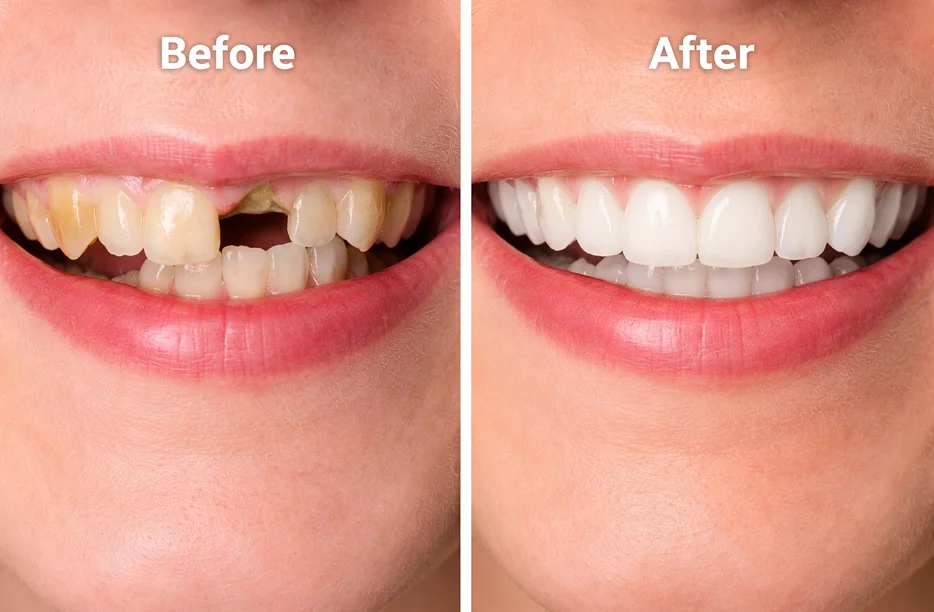
A common worry is the “gray tooth” look. Sometimes blood products or old materials stain the tooth from the inside. You don’t always need a crown or a veneer to fix this. Internal bleaching, also called “walking bleach,” is a great alternative.
The dentist places a safe whitening agent inside the tooth for a few days. They repeat this until the shade matches your other teeth. It’s a conservative way to restore your smile without grinding down healthy enamel. This works best for front teeth that are still structurally sound.
Specialized Care at Oris Dental Center
Finding the right expert makes a massive difference in your outcome. While general dentists do many things, an endodontist focuses only on saving teeth. They have years of extra training and use microscopes to see things the human eye misses. Precision is the key to a root canal that lasts for decades.
For expert Root Canal Treatment in Dubai, you can trust the experienced endodontists at Oris Dental Center. Our team includes Dr. John Paul, Dr. Wael Salem, Dr. Ahmad Dandashi, and Dr. Umaiba U. Alavi. They combine advanced imaging with a gentle touch to ensure your healing is fast and predictable. We focus on saving your natural teeth so you can avoid the high cost of implants.
Investing in a root canal is an investment in your long term health. It keeps your jawbone strong and your natural bite intact. With modern bioceramics and the 14 day crown rule, your tooth can easily last a lifetime.
Contact Oris Dental Center to get your smile back on track.