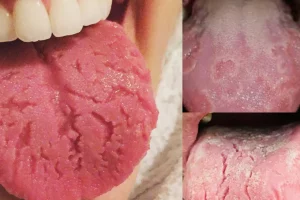

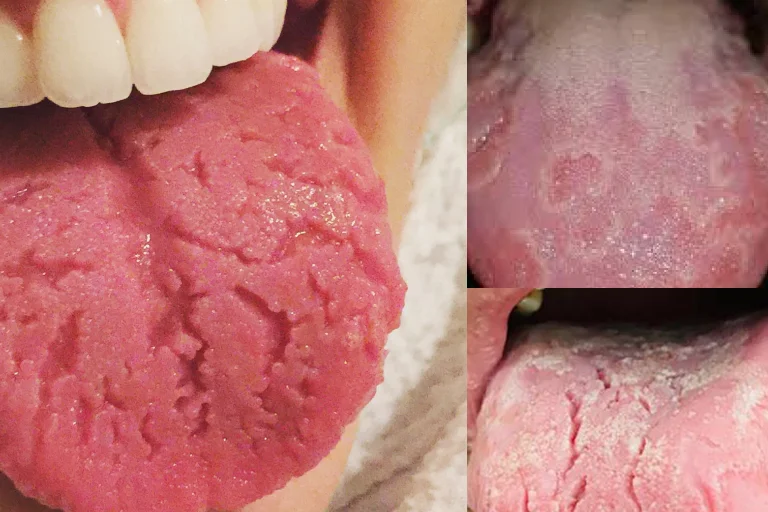

A fissured tongue isn’t a disease. It’s a structural variation where grooves or cracks appear on the top of your tongue. Doctors call it lingua plicata, but it’s basically just tongue wrinkles. Most people find it by accident while brushing. It’s not contagious, and it’s not cancer. If your tongue looks like a road map, you’re in the 5% to 20% of the population with this unique anatomy. You don’t need a cure, but you do need a solid cleaning routine.
What is a Fissured Tongue?
A fissured tongue features grooves on the dorsal surface. These furrows range from 2 to 6 millimeters deep. The pattern often starts with a central longitudinal line. Smaller cracks then branch out to the sides. It might look like a cracked desert floor or even a brain. While it looks startling, the tissue remains soft and healthy. You’re likely among the millions who have it from birth or notice it as they age.
The medical community uses the Sudarshan classification to grade these patterns. The central longitudinal type is the most common, appearing in over half of all cases. Other patterns include branching, diffuse, and lateral longitudinal. Severity is graded by the number of grooves. Mild cases have one to three cracks, while severe cases feature more than ten. If yours looks brain-like, doctors call it a cerebriform tongue. It’s still benign, but it needs more elbow grease during your morning routine.
What Causes a Fissured Tongue?
Genetics is the main driver here. Fissures tend to cluster in families. Scientists believe it’s a polygenic trait. This means multiple genes work together to create those deep lines. You might have been born with it, or it might have shown up during childhood.
Age also plays a major role. Grooves often deepen and multiply as we get older. It’s more common in men and people over fifty. Sometimes, it’s a feature of a broader condition. It’s frequently seen in people with Down syndrome, appearing in up to 80% of cases.
It can also signal Melkersson-Rosenthal syndrome. This rare triad includes a fissured tongue, facial paralysis, and lip swelling. If your cracks came with a drooping face or a swollen upper lip, see a specialist. Psoriasis is another common association. Some researchers even consider these tongue patterns an oral form of psoriasis. Dry mouth, or xerostomia, can also make these features more obvious by reducing the protective saliva barrier.
Fissured Tongue Vitamin Deficiency
Your tongue mirrors your internal health. Symptomatic cracks often point to a lack of B-complex vitamins. Low levels of B12, B9 (folate), orB2 (riboflavin) can cause a burning sensation. This is often called glossopyrosis. Fixing your diet won’t erase the fissures, but it will stop the burning.
Iron deficiency is another common culprit. Without enough iron, your tongue might look pale, smooth, or sore. Atrophic glossitis, or “smooth tongue,” often overlaps with fissuring when nutrients are low. Zinc deficiency can lead to taste changes and deeper furrows over time.
If your cracks are painful, check your nutrient levels. We see many people worry about their anatomy when the real issue is the fuel they’re putting in their bodies. Malabsorption issues like celiac disease can also lead to these deficiencies. Your tongue might be the first to tell you that your gut isn’t doing its job.
Cracked Tongue Diagnosis
A dentist diagnoses this condition with a quick visual check. They look for the characteristic depth and distribution of the furrows. You won’t need a biopsy or painful tests for a standard case. Pros focus on ruling out other issues like oral thrush or geographic tongue.
Geographic tongue causes red patches that move around like shifting continents. Up to one-third of people with geographic tongue also have fissures. If your cracks are accompanied by facial swelling, it might be something rarer. Your dentist will also check for food debris causing local inflammation, known as focal glossitis.
If the grooves have a white coating that won’t brush off, it might be a fungal infection called candidiasis. Candida albicans loves the warm, dark environment of a deep fissure. Your dentist might take a quick swab if they suspect thrush. Identifying the pattern helps your dentist track your oral health over time and spot any new “red flag” lesions.
How To Get Rid of a Fissured Tongue?
You can’t actually get rid of the fissures. They are a permanent part of your anatomy, much like your height or eye color. However, you can manage the symptoms and keep the area healthy. Meticulous hygiene is your best friend. Food and bacteria love to hide in those deep cracks.
Use a soft-bristled toothbrush to gently clean the tongue’s surface twice a day. A tongue scraper is even better for reaching into the grooves. Pull it from back to front with light pressure. Rinse with alcohol-free mouthwash or warm saltwater after meals. This flushes out the “fermenting” debris that causes bad breath.
Staying hydrated keeps your saliva flowing to naturally flush out debris. Avoid irritants like tobacco, alcohol, and extremely spicy foods. These can turn a harmless crack into a burning focal point. If an infection like thrush takes hold, you’ll need a prescription antifungal swish-and-spit. Otherwise, just treat your tongue like the rest of your mouth. Clean it daily, and it’ll treat you just fine.
Takeaway
A fissured tongue is usually a harmless anatomical quirk that needs a bit of extra cleaning. It is not a death sentence for your social life or your health. However, if your tongue feels like it’s on fire or you notice unusual swelling, it is time for a professional look.
Don’t let a “cracked” appearance ruin your confidence. Get an expert evaluation to rule out nutritional gaps or underlying syndromes. Contact Oris Dental Center in Dubai to schedule your comprehensive oral exam. Our team can help you master the best hygiene practices for your unique anatomy and put your mind at ease. Book your appointment today and give your tongue the professional attention it deserves.